Tencent WorkBuddy MarTech Case Review: How Creative Ops, Ad Delivery, Attribution, and CRM Automation Are Converging into an AI Marketing Stack
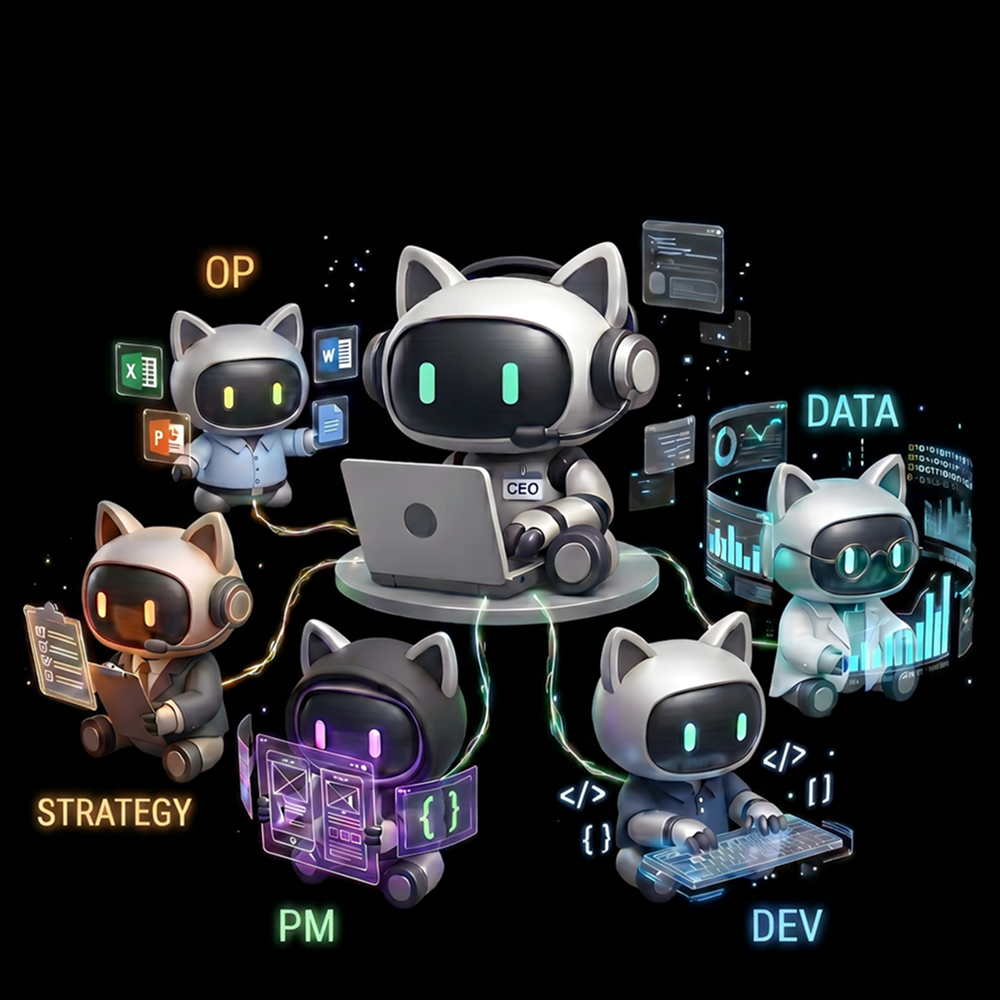
If you still think WorkBuddy is mainly about helping a marketing team draft a few lines of copy or spin up headline variations, you are only seeing the shallowest layer.
For this piece, I went back through several public materials directly related to AI marketing, programmatic advertising, live-stream and social distribution, CRM / SCRM, and AI customer service, including:
- Tencent Cloud's
AI Marketing White Paper 1.0 - Tencent Cloud developer-community breakdowns of that white paper
- the public
WorkBuddyproduct page
After reading them together, my takeaway is pretty clear:
What matters most about WorkBuddy is not just the desktop assistant people can see in front of them. It is the larger Tencent AI marketing and agent stack behind it, which is already starting to look like a real MarTech infrastructure layer.
One boundary is worth stating upfront:
I am not saying every benchmark customer in the white paper is literally using the same WorkBuddy front-end product.
The more accurate reading is this:
These cases show where the Tencent AI / agent / workflow capabilities around WorkBuddy are already entering real marketing production environments.
That is the part I think is actually worth studying.
The short conclusion first
-
As of June 29, 2026, the public materials suggest that the Tencent AI marketing and agent stack around
WorkBuddyalready breaks MarTech into four fairly clear tracks:- AI + creative: image generation, video generation, asset review, asset management
- AI + reach: programmatic advertising, live-stream and social distribution, intelligent outbound calling
- AI + data: attribution, audience profiling, real-time data insight
- AI + operations:
CRM / SCRM, private-channel conversation analysis, AI customer service
-
This is not just a concept diagram. Public materials already surface fairly concrete production signals:
16benchmark cases- video upscaling from
720pto1080pwhile cutting cost by50%+ - more than
200 billionad requests per day 30%+cost reduction in programmatic advertising and resource-side operations80%automatic interception of common questions in private-channel and customer-service scenarios85%+reply accuracy for AI customer service- about
300msfirst-token latency and under1.5send-to-end latency in intelligent outbound-calling flows
-
If what you care about right now is:
- AI marketing infrastructure
- content factory workflows
- ad-delivery systems
- attribution
CRM / SCRM- AI customer service and owned-channel operations
then this stack is much more informative than a typical "AI can write marketing copy" article.
Why I think this looks more like a MarTech agent stack than a content tool
In marketing, the expensive and messy part is usually not that one line of copy takes too long to write. It is that the whole chain is fragmented:
- creative production is slow
- asset review and management are messy
- ad delivery eats requests, bandwidth, and infrastructure
- attribution lags behind, so decisions are always late
- once leads enter
CRM, conversations fragment and follow-up breaks - support and quality control are still labor-heavy
In other words, what makes MarTech hard is usually not one isolated task. It is this:
from creative to reach to attribution to operations, the whole chain is high-concurrency, high-frequency, and system-heavy.
That is why I do not think this stack should be judged only by whether "WorkBuddy can write something." It makes more sense to look at:
- creative production
- ad and channel reach
- real-time data
CRM / SCRM- AI customer service
all at once.
The most important public anchor: Tencent Cloud's AI Marketing White Paper lays out the chain directly
Tencent Cloud's developer-community breakdown of Tencent Cloud AI Marketing White Paper 1.0 already lays out the table of contents and case clusters very clearly.
The white paper splits MarTech into four major modules:
1. AI + Creative
- marketing image production
- marketing video production
- marketing asset review
- marketing asset management
The benchmark cases named here include:
筷子科技Libib / Liblib
2. AI + Reach
- full-chain programmatic advertising
- network cost optimization
- frequency control
- intelligent traffic allocation
- dynamic floor-price detection
- click-through and conversion-rate estimation
- data metric monitoring
- live-stream and social marketing distribution
- intelligent outbound calling
The benchmark cases named here include:
蓝色光标TradPlusBidnex至真科技保利威微吼EC百应
3. AI + Data
- user profiling and attribution analysis
- paid-acquisition attribution for mini-programs and mini-games
- media attribution
CDP- live-marketing data analysis
- data-insight agents
The benchmark cases named here include:
明略珍岛
4. AI + Operations
CRM / SCRM- multi-tenant management
- private-channel conversation analysis
- AI customer service
- intelligent quality inspection
The benchmark cases named here include:
微伴助手探马天润融通智齿科技乐言科技
That directory alone already makes one thing obvious:
this is not a "help marketers write posts" product story. It is an AI infrastructure story that is trying to cover the entire marketing chain.
Scenario 1: creative production is not just about making assets, it is about pushing content-factory costs down
One of the easiest public figures to remember from the white paper is this:
- in the
Libib / Liblibcase, video is upscaled from720pto1080p - while cutting cost by
50%+ - and improving asset-production efficiency by
20%+
Why does that matter?
Because it shows the creative side is no longer just about "AI helps you brainstorm." It is moving toward:
- large-scale content production
- quality enhancement
- asset reuse
- cost optimization
In other words, what this stack is really trying to replace is not a copy helper. It is:
a high-cost, low-reuse, labor-heavy asset production chain.
Scenario 2: the reach layer is already far beyond "placing ads" and looks more like billion-scale request handling plus millisecond decisions
The second hard signal in the white paper is the scale of the infrastructure on the programmatic-advertising side.
The public figures include:
- in the
Bidnexscenario, ad requests exceed200 billionper day TradPlushandles more than30 billionrequests per day- network cost can account for
40%+ofITspending on some ad platforms - through intelligent traffic allocation and network optimization, related customers cut costs by
30%+
What does that tell us?
It tells us that the most valuable part of AI in marketing is often not "speaking better." It is:
- allocating traffic better
- estimating click-through and conversion better
- probing floor prices better
- controlling resources and latency better
That looks much more like:
an intelligent scheduling layer for marketing systems
than a simple chat product.
Scenario 3: live-stream, social, and outbound-calling cases show that "reach" is already multi-channel, not just one ad slot
The white paper does not stop at ad platforms in the AI + Reach section. It also includes:
- live-stream origin infrastructure
- live-stream acceleration
- video-on-demand transcoding
- virtual live-streaming
- intelligent outbound calling
The named public cases include:
保利威微吼EC百应
More importantly, the intelligent outbound-calling metrics are concrete:
- about
300msfirst-token latency - under
1.5send-to-end latency
That tells you this stack is not just handling "marketing content generation." It is handling:
real-time user reach in production.
At that point, AI is not just writing scripts. It is already tying into:
- speech recognition
- speech synthesis
- script analysis
- high-concurrency phone outreach
And once you look at it that way, it becomes much easier to understand why WorkBuddy and Tencent's agent direction are framed as a workflow and agent system rather than a single-purpose model tool.
Scenario 4: attribution and data insight are where marketing teams actually decide how to spend budget
When many teams talk about "AI marketing," the first reactions are still:
- headline writing
- image generation
- video generation
But the third line in the white paper is arguably more important:
data attribution and predictive decision-making
Several public signals here are worth paying attention to:
- attribution latency shrinking from
T+1to near-real-time or minute-level - ad conversion rate improving by
1.2% - data-insight agents being explicitly written into the scenario set
- user profiling and
CDPbeing treated as core components
What does that mean?
It means this stack is not only trying to make front-end creative faster. It is trying to make:
budget allocation, attribution judgment, and downstream operations faster too.
In marketing, the expensive mistake is often not that one asset took too long. It is:
- the money is already spent
- and you only discover the bad traffic the next day
Once the data-attribution and insight-agent layer starts to work, the value is much bigger than what a content tool alone can describe.
Scenario 5: AI + operations is already moving into CRM, SCRM, private-channel ops, and support
The fourth track in the white paper is the one I think growth and owned-channel teams should pay the most attention to:
CRM / SCRM- multi-tenant management
- private-channel conversation analysis
- AI customer service
- intelligent quality inspection
The public quantitative outcomes are also fairly specific:
- in scenarios such as
天润融通,80%of common questions are intercepted automatically - AI customer-service reply accuracy reaches
85%+ - resource utilization improves by
38% - resource cost savings exceed
30%
That tells us this stack is not entering short-term campaign tooling. It is entering:
customer lifecycle management.
That is exactly why I think it looks more like MarTech infrastructure than a marketing-content plugin.
Because the long-term value is usually not one viral post. It is:
- how leads are handled after they come in
- how conversations are analyzed
- how support cost is reduced
- how user issues are routed automatically
Why this is related to WorkBuddy instead of "some other cloud product"
This part matters, otherwise it is easy to misread the argument.
Many of the things listed in the white paper are indeed not features a user simply clicks through in the WorkBuddy front end.
But the public WorkBuddy page already makes one key fact visible:
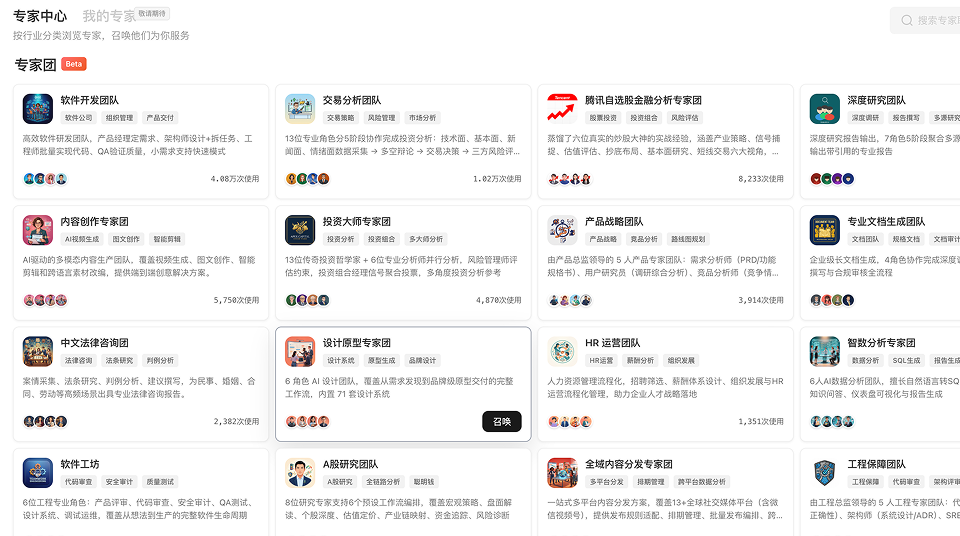
- multi-expert collaboration
- multi-role collaboration
- workflow-style orchestration
- an expert center
In front, those capabilities are packaged as a workbench for office productivity and agents. In back, they sit on top of Tencent's broader AI, agent, data, and systems infrastructure.
So the more useful way to read this is:
WorkBuddy is the workbench entry point people can touch, while the AI Marketing White Paper shows how far that capability route already reaches into the marketing-technology back end.
That is why this article is about the Tencent AI marketing and agent route around WorkBuddy, not a forced claim that every customer is using the exact same front-end product.
Which teams should study this route first
I think the following teams have the strongest reason to look at it early:
- teams running branded content factories and creative operations
- teams focused on programmatic advertising, paid acquisition, and delivery optimization
- teams building live-stream or social marketing infrastructure
- teams working on intelligent outbound calling, sales reach, and lead nurturing
- teams building
CRM / SCRM, owned-channel operations, or support automation - teams running marketing data platforms, attribution, and audience profiling
If your real question is no longer "can AI write marketing copy," but rather:
- how do we scale assets
- how do we make traffic more efficient
- how do we speed up attribution
- how do we lower support cost
- how do we automate
CRM
then this route is much more worth your time than generic content-generation articles.
My final view
If I had to summarize this WorkBuddy MarTech case review in one sentence, it would be this:
The most important thing about WorkBuddy is not the office assistant on the desktop. It is the Tencent AI / agent / MarTech infrastructure line behind it, which is already reaching into creative, reach, data, and operations.
The public signals are already fairly explicit:
16benchmark cases20%+asset-production efficiency improvement50%+cost reduction alongside video super-resolution- more than
200 billionad requests per day 30%+delivery or resource cost reduction80%interception of common service questions85%+reply accuracy- under
1.5send-to-end latency for intelligent outbound calling
So the real question is no longer:
"Can AI help marketers write content?"
It is:
"Can AI start taking over the heaviest, most expensive, and most failure-prone system work across the MarTech chain?"
Based on the public materials, Tencent's route is already moving in that direction.
If what you care about more right now is:
- current access routes
- models and pricing
API Keypurchase- tutorials
you can start here:
FAQ
Is this article saying that the customers in the white paper are all directly using the WorkBuddy front end?
No. The more accurate claim is:
these cases show which marketing-production environments the Tencent AI marketing and agent route around WorkBuddy has already entered.
What are the main tracks in Tencent's AI Marketing White Paper?
The public materials mainly break it into four tracks:
AI + creativeAI + reachAI + dataAI + operations
What are the strongest public quantitative signals in this route?
The most memorable ones include:
16benchmark cases50%+cost reduction alongside video upscaling- more than
200 billiondaily ad requests 30%+cost reduction80%interception of common service questions85%+AI customer-service reply accuracy
Why is this route more worth studying than "AI can write marketing copy"?
Because the expensive parts are usually not one piece of copy. They are:
- traffic cost
- attribution delay
- private-channel conversation analysis
CRM / SCRM- customer-service cost
which means the real issue is the whole MarTech system.
If I want the current public access information first, where should I start?
These three pages are the fastest place to start: