Tencent WorkBuddy CRM and SCRM Review: What the Public Cases Really Show About Private-Channel Ops and AI Customer Service
If you read WorkBuddy only as a helper that polishes one support reply or drafts a sales message for a WeCom operator, you are probably underestimating where the more interesting signals are.
For this article, I looked at several public sources together:
- the public
WorkBuddyproduct page - Tencent Cloud's
AI Marketing White Paper 1.0and public summaries of it - public material from
Weiban Assistant - public material from
TanMarket SCRM
After reading them side by side, my conclusion is fairly direct:
What matters here is not just a visible AI workspace. It is that Tencent's broader AI and agent stack is already touching the heavier parts of customer operations, including CRM, SCRM, private-channel conversation analysis, marketing automation, and AI customer service.
One boundary matters up front so this does not get overclaimed:
I am not saying every benchmark case in the white paper is literally using the WorkBuddy front-end that buyers can see on the public site.
The safer reading is this:
These cases show which real operating scenarios the Tencent AI, agent, and workflow layer around WorkBuddy is already entering.
The short verdict first
-
As of June 29, 2026, Tencent Cloud's public
AImarketing white paper materials split customer operations into two especially clear tracks:CRM / SCRM- AI customer service and AI quality inspection
-
The related benchmark names surfaced publicly include:
Weiban AssistantTanMarketTianrun RongtongZhichi TechnologyLeyan Technology
-
The public performance signals are also fairly concrete:
85%automated answer accuracy for AI customer service80%interception of common questions50%labor-cost savings for human support- about
300msfirst-token latency for intelligent outbound calling - under
1.5send-to-end latency 20%+cost savings from elastic scaling withTDSQL-C Serverless
-
If your current evaluation lens is:
- owned-channel operations
SCRMfor WeCom- customer segmentation
- marketing automation
- conversation analytics
- AI customer service
then this cluster is much more useful than the usual "AI writes better support copy" narrative.
Why this looks more like a customer operations stack than a chat assistant
The hard part of customer operations is rarely whether a system can produce one plausible answer. The hard part is that the operating chain is fragmented:
- customer data lives in multiple systems
- orders, tags, conversations, and follow-up records do not line up cleanly
- operating playbooks are hard to reuse
- support and sales conversations are rarely turned into reusable team assets
- support efficiency and service quality often pull in opposite directions
So the real challenge is usually not one message. It is this:
from customer identification and segmentation to outreach, conversation analysis, answer generation, QA, and system write-back, the whole chain is high-frequency, multi-role, and workflow-heavy.
That is why I think a workstation-style agent such as WorkBuddy is more interesting when you ask:
- can it pull knowledge from the right sources?
- can it run workflows?
- can it connect to enterprise records?
- can it return useful outputs back into the operating system?
That matters more than whether a single reply sounds human.
The white paper makes the operating scope explicit: CRM, SCRM, private-channel analytics, AI customer service, and AI QA
Tencent Cloud's public summaries of Tencent Cloud AI Marketing White Paper 1.0 Overview and Tencent Cloud AI Marketing White Paper 1.0 are unusually direct on this point.
In the public table of contents, the AI + operations section explicitly includes:
CRM / SCRM- multi-tenant management
- private-channel conversation analysis
- customer-service agents
- intelligent quality inspection
And the paper does not stop at category labels. It names benchmark cases directly:
4.2.1 Weiban Assistant4.2.2 TanMarket4.4.1 Tianrun Rongtong4.4.2 Zhichi Technology4.4.3 Leyan Technology
The published operating-side outcome claims are also specific:
85%automated response accuracy for AI customer service80%interception of common support questions50%reduction in human customer-service cost
That matters because Tencent is clearly not framing this as "AI can draft better replies."
It is framing the opportunity as:
structuring marketing, sales, service, and customer-lifecycle actions as one operating system.
Case 1: Weiban Assistant is no longer just a WeCom plug-in story
If you only read the white paper table of contents, the story still feels broad. But Weiban Assistant's own public material makes the owned-channel operations layer much more concrete.
In Mininglamp's public article, Weiban Assistant: Doubling Down on Precision Customer Operations, the most valuable part is not the slogan. It is the production detail:
- teams can use order data, customer tags, behavior, and profile attributes together for audience targeting
- the stack connects order data from Youzan, Weimob, Xiaoetong, Taobao, JD, Douyin stores, and WeChat Channels stores
- operators can view order status from different platforms directly in the side panel
- that data then feeds segmentation,
SOPworkflows, and marketing automation
The production-grade part is this:
it is not only storing conversations. It is putting customer profiles, order history, conversations, and campaign actions into one operating loop.
The same article also mentions a representative brand case:
- in
LEGO's owned-channel transformation, member data acrossCRM / CDP / WMP / POSsystems was integrated and cleaned - members were scored and clustered with an
RFMmodel - after rollout, WeCom membership grew by
20% - order volume grew by
20% - average order value grew by
10%
That is no longer a copy-generation story. It is a classic case of:
customer-data unification, segmented operations, and automated outreach.
Case 2: The real value of private-channel conversation analysis is not summaries
Another detail from the Weiban Assistant material is easy to miss but important:
AIdrafting and rewriting- sales knowledge-base replies
- extraction of word frequency, customer attributes, and meeting information from conversation logs
- automatic write-back into the customer profile
That means the valuable part of private-channel conversation analysis is not "summarize the chat."
It is:
- enriching customer profiles from conversations
- identifying buying signals from conversations
- turning conversations into knowledge assets
- triggering downstream operating actions from conversations
That is very different from a standard support bot.
A basic bot usually works like this:
- question comes in
- one answer goes out
This operating model looks more like:
- conversation starts
- customer state gets identified
- the question gets answered
- the profile gets updated
- follow-up actions get triggered
That is much closer to a real customer-operations system.
Case 3: TanMarket SCRM looks more like a full private-channel operating platform than a point tool
The second public line worth studying is TanMarket SCRM.
TanMarket's official site describes itself very directly as a full-process private-traffic operations platform for enterprise customers, covering:
CRM- WeCom marketing
- employee management controls
- WeChat customer service
- social commerce
- telesales devices
- analytics
The vertical scope is also broad. Its public material explicitly names:
- education
- insurance and financial services
- medical beauty
- home and renovation
- software and enterprise services
- manufacturing
- retail
- ecommerce
- automotive
What I find more useful than the category list is the feedback language shown on its data-analysis page:
- more precise customer tags and segmentation
- higher staff efficiency and more visible data
- manual operating processes moved online and standardized
When you put that next to the white paper's CRM / SCRM and private-channel conversation-analysis themes, the direction becomes clear:
customer operations is moving away from isolated tools and toward platform-style, workflow-driven, data-rich systems.
Case 4: AI customer service is not just FAQ anymore
Many buyers still hear "AI customer service" and think of a knowledge-base FAQ bot.
But the public white-paper signals are already pointing at heavier production requirements, especially in two categories.
1. Service outcome signals
85%automated response accuracy80%interception of common questions50%human support cost savings
2. Infrastructure signals
- about
300msfirst-token latency for HunyuanLarge - under
1.5send-to-end latency withTRTC - support for
100,000+concurrent reads and writes withTDSQL-C Serverless 20%+cost savings from elastic scaling
Those numbers suggest that the hard part is no longer "can the model answer at all?"
It is:
- is the latency low enough?
- does the system hold up under concurrency?
- are the answers stable enough for service operations?
- can quality inspection keep up?
That makes this look more like:
AI-enabled service infrastructure
rather than:
automated reply drafting
What WorkBuddy means here: not necessarily one front end, but a useful agent-workstation lens
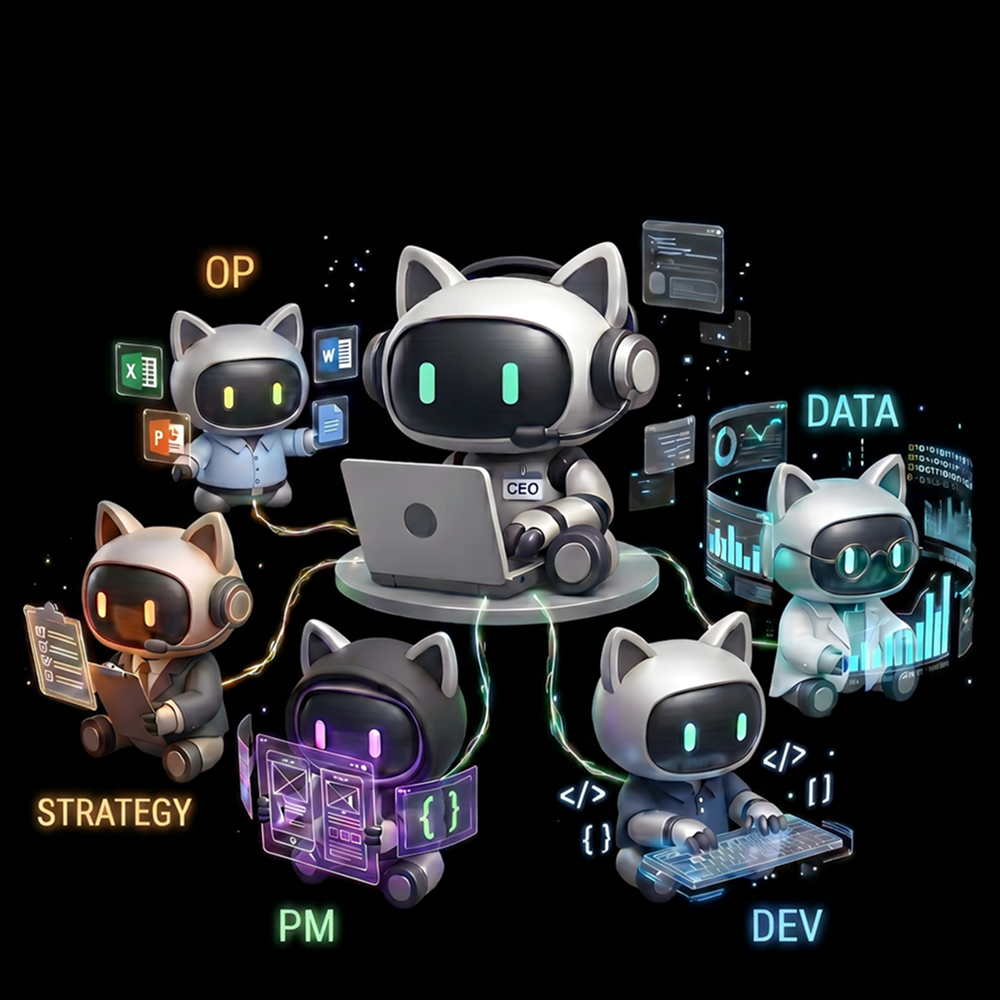
The public WorkBuddy page positions the product as an AI agent workplace that can plan and deliver complex multimodal tasks and support multiple agents working in parallel.
That wording becomes much more interesting when you place it inside CRM, SCRM, and AI customer-service workflows.
Because customer-operations teams already work like multi-task coordinators every day:
- checking customer profiles
- looking up a knowledge base
- generating reply options
- analyzing conversations
- deciding follow-up actions
- writing results back into systems
So for me, the real value of a WorkBuddy-style front end is not only "give support a smarter chat box."
It is closer to this:
give operations, sales, and support teams an agent workstation that connects knowledge, workflows, actions, and outputs.
Which teams should take this seriously now
Strong fit today
- teams running WeCom
SCRM, owned-channel operations, or customer segmentation - support teams with high FAQ volume and expensive QA overhead
- businesses that need order data, conversations, profiles, and knowledge bases in one loop
- organizations building a customer-operations platform, service platform, or sales-support layer
Lower urgency for now
- teams with only very light customer-service Q and A needs
- teams that do not yet run segmentation or automation
- teams with no usable knowledge base, customer profile, or order-system data to connect
If you want to build a similar flow yourself
If what you really care about is how to build a similar CRM / SCRM / AI customer service workflow with large models, knowledge bases, and agent orchestration, start with:
For a global buyer, that is usually more actionable than memorizing one upstream product name. The more useful evaluation frame is:
- model capability
- operating cost
- tools and integrations
- workflow orchestration
Final take
If I had to compress this whole WorkBuddy CRM / SCRM review into one sentence, it would be this:
The most important signal is not whether WorkBuddy can answer one support question well. It is that Tencent's broader AI and agent stack is already reaching the heavier part of customer operations: segmentation, private-channel conversation analysis, marketing automation, AI customer service, and QA.
And if those layers really do get connected end to end, the opportunity is bigger than an office assistant.
It starts to look like:
a customer-operations workstation plus an agent infrastructure layer.