Tencent WorkBuddy Compliance Review Cases: Why Agentic Knowledge Bases Matter More Than Generic Enterprise Search
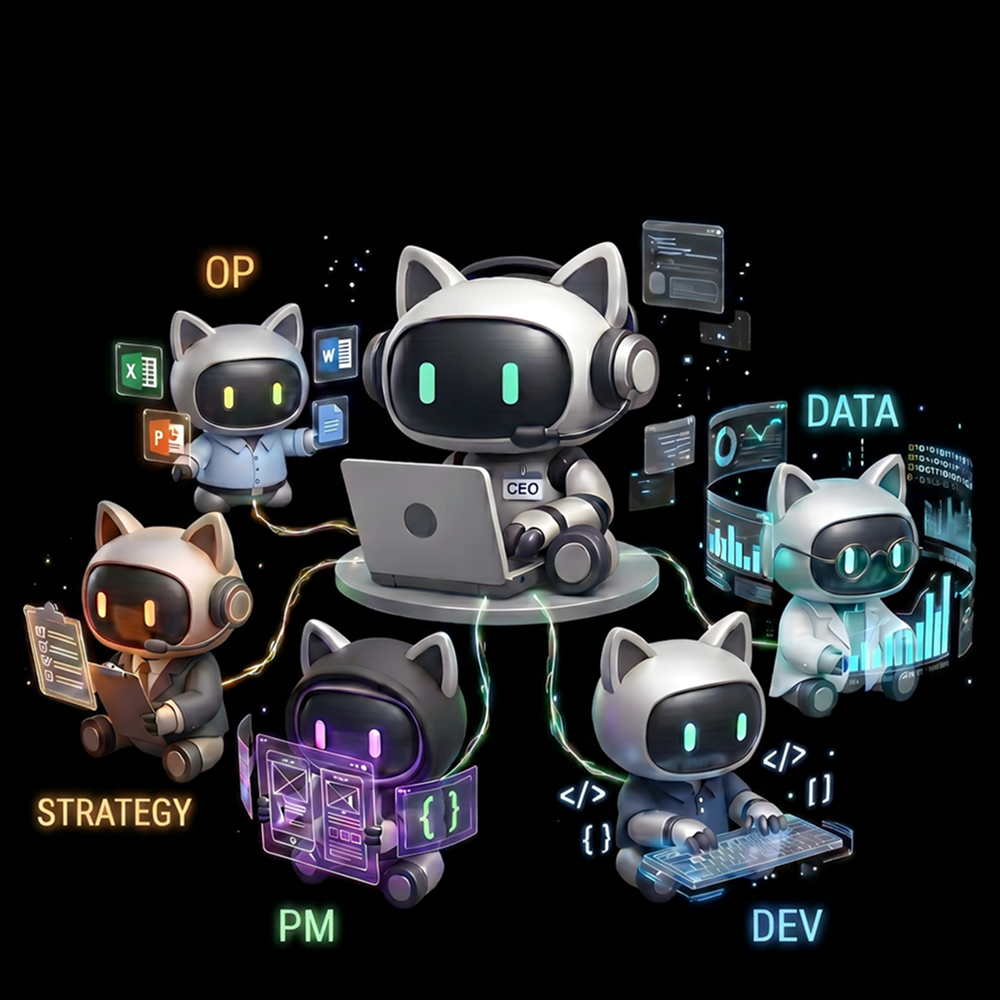
If you read WorkBuddy as just another enterprise chatbot that can search internal files, you are probably missing the part that matters.
I reviewed three public Tencent Cloud Developer Community articles together:
- Lexiang Knowledge Base: AI boosts manufacturing compliance review efficiency by 10x
- How manufacturing and energy companies improve compliance review with an agentic knowledge base
- Tencent Agent Suite office agent product and industry solution overview
My takeaway is straightforward:
The interesting signal is not whether the knowledge base can answer questions. It is that the WorkBuddy + Lexiang Knowledge Base stack is being positioned for real compliance-review work: complex document parsing, version traceability, clause-level extraction, knowledge graph linking, and auditable evidence trails.
One boundary is worth stating early so buyers do not over-read the case studies:
This does not mean every power plant design institute or every manufacturer is running the same WorkBuddy front-end workflow.
The safer reading is this:
These public case materials show Tencent's AI and agentic knowledge-base direction being applied to tasks that look much closer to industrial compliance production than to generic enterprise Q&A.
Bottom line first
-
As of June 29, 2026, the strongest public
WorkBuddy + Lexiang Knowledge Baseuse case in manufacturing and energy is not lightweight knowledge search. It is:- Deep parsing of complex industrial documents
- Dynamic version management and diff traceability
- Clause-level extraction and risk pinpointing
- Knowledge graph linking and impact analysis
-
The hardest quantitative signals in the published materials include:
10x+compliance review efficiency gains- Review cycles reduced from weeks to hours
100%evidence-chain coverage- Proactive
P0risk alerts - Automated change tracking and downstream impact analysis
-
If your team deals with:
- power plant design review
- manufacturing compliance
- energy-sector knowledge governance
- standards review
- version updates and regulatory tracking
this is materially more useful than another generic article about enterprise knowledge bases.
Why industrial compliance is such a good fit for agentic knowledge bases
In industrial environments, the real bottleneck is usually not a lack of standards knowledge. It is the weight of the review chain itself:
- document formats are messy
- drawings, formulas, and tables live in the same file
- clauses are fine-grained
- standards change often
- one update can affect a long tail of legacy documents
So the hard problem is rarely just Q&A.
It is the whole path from document intake to clause recognition, version comparison, impact analysis, and evidence retention.
That is why the more relevant question is not whether the model sounds smarter, but whether the system can:
- structure complex documents correctly
- track version changes
- localize clause-level risks
- leave a review trail that can be audited later
Scenario 1: Complex industrial documents mean more than PDF chat
One of the clearest signals in the public material is that WorkBuddy + Lexiang Knowledge Base is not framed as a plain document index.
Tencent's public write-up emphasizes:
- deep multi-format parsing
- accurate handling of drawings and mathematical formulas
- conversion into standardized Markdown or AI-ready knowledge assets
That matters because industrial review work is often blocked by:
- engineering drawings
- formula-heavy sections
- referenced standards clauses
- version annotations
If those elements are not structured correctly at ingestion time, any later "knowledge base Q&A" layer stays shallow.
Scenario 2: The power plant design institute case matters because it compresses the whole workflow
The most valuable published case is the one describing:
- a power plant design institute
10x+compliance review efficiency improvement- review cycles reduced from weeks to hours
Why does that number matter?
Because it suggests the gain is not from making one search step faster. It is from shortening the full review path:
- document preparation before review
- clause localization during review
- evidence filing after review
In other words, this looks less like "one employee searches faster" and more like:
an entire compliance-review chain getting compressed.
Scenario 3: 100% evidence-chain coverage is the signal that makes this more than summarization
Another important signal in the public case material is:
100%evidence-chain coverage- a traceable and auditable closed loop
That is critical in industrial compliance.
The question is often not just whether the system found an issue. It is whether teams can later reconstruct:
- which source clause supported the conclusion
- who changed what
- why a node or document was flagged
Without an evidence chain, even a strong model has a hard time crossing into higher-risk production environments.
At minimum, the public positioning suggests Tencent is not only trying to auto-generate opinions. It is trying to turn the review process into something auditable.
Scenario 4: Clause-level extraction and knowledge graphs push this beyond full-text search
Two phrases show up repeatedly in the public materials:
- clause-level precision extraction
- knowledge graph linking
That matters because many industrial review risks do not sit at the document level. They sit in a small clause, a parameter, or a version marker.
If a system only does full-text keyword search, it can help you find relevant files.
If it can extract and normalize at the clause level, it has a path toward:
- pinpointing exact risk locations
- mapping relationships between clauses
- connecting new standards updates to old documents
And once you combine that with a knowledge graph, you can go one step further:
- what downstream assets are affected by this changed node
- which stored documents need re-review after a standards update
That is much closer to a real industrial review environment than to a generic enterprise knowledge base.
Scenario 5: Automated change tracking goes after legacy-document update pain
The public case write-ups also mention:
- dynamic version management
- automatic diff generation
- multi-branch merge and conflict handling
- automated change tracking
- node-level changes triggering global impact analysis
This maps closely to the pain many manufacturers and energy companies already know:
- hundreds or thousands of existing technical documents
- new standards arrive, but old versions remain everywhere
- somebody still has to make sure nothing important was missed
That is why the value here is not simply "faster answers."
It is that the system starts to address the harder problem of maintaining historical enterprise knowledge assets over time.
Scenario 6: Why this looks like WorkBuddy plus a knowledge-processing layer, not a standalone knowledge-base tool
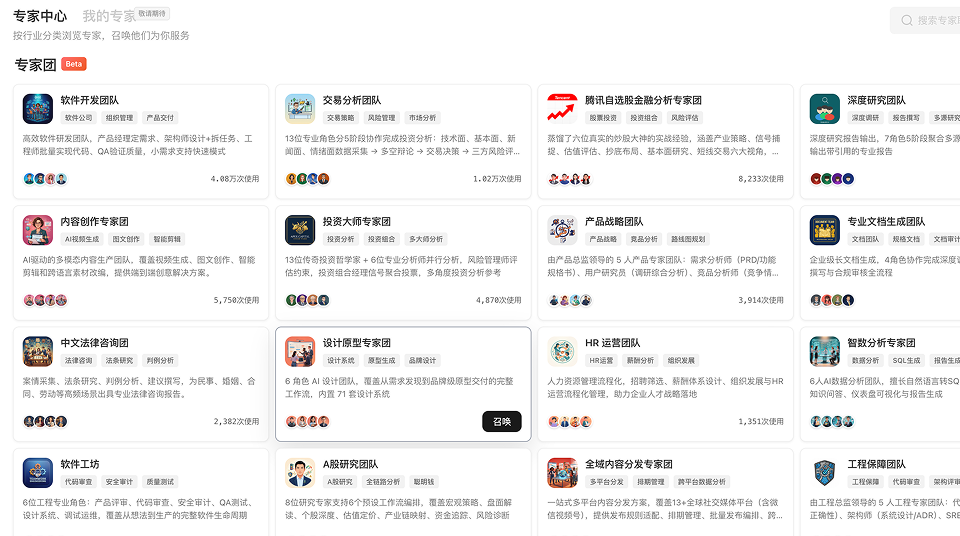
From the public materials, WorkBuddy Enterprise is positioned around:
- unified management
- multi-end delivery
- an AI agent platform
- turning agents into enterprise assets
Lexiang Knowledge Base appears to provide the heavier foundation:
- knowledge processing
- version governance
- graph and clause-localization support
Together, the stack starts to look like:
WorkBuddyas the workspace and orchestration layer- Lexiang Knowledge Base as the dense knowledge-processing layer
That is why I would frame this less as "an upgraded knowledge base" and more as:
an agentic knowledge-governance workbench.
Which teams should pay attention first
Teams that should evaluate this now
- power plant design institutes and industrial quality or compliance teams
- teams reviewing technical specifications, design standards, or policy clauses at scale
- enterprises with complex drawings, formulas, and standards-heavy documents
- organizations that need version traceability, regulatory sync, and auditable review logs
Teams that can wait
- organizations with simple documents and infrequent standards changes
- teams with little pressure around auditability or version tracking
- groups that only need lightweight knowledge Q&A today
If you want to build a similar workflow yourself
If your real question is how to connect clause-level extraction, version tracking, knowledge graphs, and compliance review into your own stack, start with:
The more useful exercise is not memorizing one upstream product name. It is comparing:
- model capability
- knowledge-processing design
- agent workflow design
- audit and evidence requirements
from one buyer decision frame.
Final take
If I had to reduce this WorkBuddy + Lexiang Knowledge Base review to one line, it would be this:
The most important signal is not that enterprise knowledge retrieval is getting smarter. It is that this stack is starting to address the hardest part of industrial compliance review: complex document parsing, version traceability, clause-level precision, and evidence-chain closure.
If that workflow truly holds up in production, the upside is bigger than office productivity.
It points toward a broader redesign of enterprise knowledge governance and industrial compliance review.
That said, the case numbers cited above come from public Tencent materials. They are useful as buying signals and architecture clues, not as universal performance guarantees for every design institute or manufacturing enterprise.