Tencent WorkBuddy Review for Construction Marketing Teams: Bid Deck Rebuilds, Weekly Reports, and Client Battle Maps
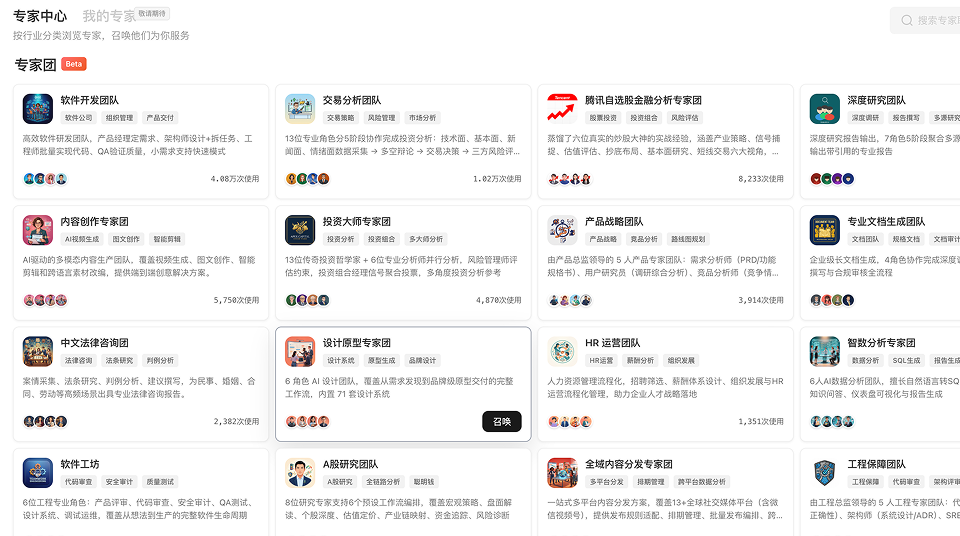
If you still think WorkBuddy is basically a desktop office assistant that can chat, construction marketing is the kind of workload that breaks that assumption fast.
I went through several public materials tied directly to construction-industry marketing, bid PPT workflows, weekly report automation, client battle maps, and multi-document policy reconstruction. After reading them together, the conclusion feels pretty clear:
What makes WorkBuddy interesting is not whether it can write a polished paragraph. It is that it is starting to enter the most labor-intensive layer of project-driven work.
That includes things like:
- structural unpacking and rebuilds for long bid
PPTdecks - automatic generation of weekly and daily reports for regional marketing teams
- structured cleanup of key-account and project lists
- consistency maintenance across policy files, scoring sheets, and cross-references
These tasks share the same pattern:
- too many files
- too many versions
- constant revisions
- and if something is changed incorrectly, the problem is not bad wording, it is workflow risk
That is why I think WorkBuddy matters in construction and engineering marketing for a different reason:
it starts to look less like a copy assistant and more like a digital project aide for heavy-document workflows, structured output, and iterative revisions.
The Short Verdict
-
As of June 29, 2026, public material suggests
WorkBuddycan already support at least four concrete workflow tracks inside construction marketing and other document-heavy industries:- structural analysis and automated rebuilds for bid
PPTdecks SCQA- and pyramid-principle-based weekly and daily report generation- structured battle maps for key accounts and project pipelines
- consistency rebuilds across multi-file policy systems and supporting tools
- structural analysis and automated rebuilds for bid
-
The most important signal is not whether "AI sounds natural." It is that public cases already show production-like details such as:
- a full
PPTX -> XML -> python-pptx / PptxGenJSprocessing chain - compressing manual work from
2-3hours down to5minutes of waiting plus human review - shrinking a
40-page bidPPTfrom half a day of edits to under1hour - structuring
56key projects in a regional marketing workflow - consolidating
35expert comments across58files in a power-channel management scenario - upgrading from
V5.1toV5.2with14coordinated file edits and43reordered policy clauses
- a full
-
If you care right now about:
- construction or engineering marketing efficiency
- tender and bid-material reconstruction
- automating regional client and project ledgers
- maintaining consistency across many documents
then these cases are more useful than a generic AI office demo.
Why Construction Marketing Is Actually a Strong Test for Whether WorkBuddy Is a Real Productivity Tool
Construction marketing is very different from ordinary content marketing.
The work that really consumes people is not "write one promo paragraph." It is the harder layer underneath:
- bid packages, slide decks, and planning documents keep getting revised
- client profiles and project progress are scattered across many files
- weekly reports, daily reports, and ledgers need repeated consolidation
- before every topic meeting, scattered information has to be repackaged into something management can read quickly
- external presentations still have to align with competition, investment size, contacts, and project stage
The biggest problem in this workflow is not that the team does not know how to do the work. It is this:
every round has to be rebuilt again, and every rebuild risks losing context.
That is why the public WorkBuddy cases become much more convincing once they touch:
- local files
- multi-page
PPTs - project ledgers
- cross-references
- structured weekly reporting
At that point, the value is much more obvious than "help me write a better headline."
Case 1: Bid PPT Work Stops Being Slide-by-Slide Manual Editing and Starts with Unpacking, Recognition, and Rebuild
In the public article WorkBuddy in Practice: The Complete AI Office Automation Guide for Construction Marketing Teams, the most SEO-worthy section is not "efficiency improved." It is how concretely the author describes the core workflow of a frontline construction marketer.
The public description is direct:
- the author works on market development for the Haizhu district in Guangzhou inside a large construction company
- the daily workload includes bid materials, client files, project weekly reports, performance indicators, and marketing plans
- in the past, reformatting one
PPTcould burn half a day
The most representative part is the openly described PPTX processing chain:
installer package -> markitdown text extraction -> unpack XML for structure analysis -> python-pptx generates the optimized version
The most valuable part here is not "it can generate a new deck." It is this:
1. It tries to understand structure before it touches formatting
In the public case, the author does not simply ask WorkBuddy to beautify a slide deck. The task is broken into steps:
- extract all text
- unpack the
PPTX - analyze slide-by-slide structure
- identify cover pages, contents pages, content pages, and transition pages
- then generate an improved version
That implies WorkBuddy is not only polishing surface style. It is doing:
structure-level analysis plus generative reconstruction
2. It is entering the real bid-material revision loop
The same public article also gives a more production-like example:
- the source file is a
40-page topic-meeting bidPPT - WorkBuddy is asked to classify slide types first
- the public classification result includes:
3cover-style slides8table slides12text-analysis slides5chart slides12other slides
- then the author specifies:
- table slides should use a unified cyan theme
- text-analysis slides should be compressed into
3key points - chart slides should use larger font sizes
The result is equally concrete:
- before: half a day
- after: completed within
1hour, including human review and fine-tuning
That is much closer to real tender work than "help me draft one solution-intro slide." The reason is simple: what actually consumes time is almost never writing one new page from scratch. It is:
- revising old versions again and again
- keeping the structure intact
- turning mixed pages into one persuasive narrative
Case 2: Weekly and Daily Reports Start Getting Compressed into Fixed Prompts and Fixed Output Structure
The second detail worth paying attention to in construction marketing is structured output for weekly and daily reporting.
In the same public case, the author uses WorkBuddy for project-progress reporting, and not as a loose summary. The output is explicitly required to follow the SCQA framework:
- situation
- complication
- question
- answer
The public example uses inputs like:
- Project A completed a second-round review and entered the quantity-survey stage
- Project B confirmed a client visit and will visit headquarters next week
- Project C has already seen the competitor secure soil-retention and dewatering work, so our side needs stronger technical differentiation
WorkBuddy then turns that into a formatted, structured report.
Why does that matter?
Because project-driven marketing teams spend their time not on "creative writing," but on repeatedly:
- compressing scattered progress into a reportable structure
- explaining risks and next actions in the right order
- turning "we have been busy" into "this is where the business now stands"
That is why I see weekly-report automation as one of the stronger signals that WorkBuddy is moving into real production use.
Another public article, The Office Sidekick and Weekly-Report Power Tool: Just Input Project Progress and Triple Your Efficiency, adds a simpler benchmark:
- before, a weekly report took
30minutes - now, it is down to
10minutes
Even if those numbers should still be treated as public-case framing rather than audited metrics, they still point to a clear trend:
high-frequency, low-creativity, but highly structured work like weekly reporting is becoming a stable WorkBuddy workflow.
Case 3: The Client Battle Map Is Really About Turning Project Marketing into a Structured Database
The part of the public construction case that feels closest to actual regional marketing work is the battle map.
The author's public scenario is:
- there are
56key projects in Haizhu district - building the client list used to mean digging through many files
- now WorkBuddy reads project files directly and produces a structured table
The public table fields include:
- client name
- project type
- investment size
- follow-up stage
- key contact
- competitive situation
The example even names concrete items such as:
- ByteDance headquarters building, investment size
2.414billion RMB, currently in bidding 37 Interactive Entertainmentbusiness center, early-stage engagement
Once that information can be compressed reliably into a structured table, the value is not just time savings. It starts to change how the marketing team works:
- no more reopening the same scattered materials before every meeting
- no more spreading project stage, client names, and competitive status across separate groups and files
- no more relying on one person's memory to maintain the picture of key projects
In other words, WorkBuddy is not just "generating a paragraph." It is:
pushing regional project marketing toward a lightweight CRM or lightweight war-room ledger.
Case 4: What Really Shows WorkBuddy Is Not a Surface-Level Office Assistant Is Its Multi-File Consistency Work in the Power Industry
If you only read the construction-marketing article, you could still argue:
- this looks like document processing and reporting efficiency
- it does not fully prove the system can handle complex multi-file work
So I also looked at two public power-industry cases:
- WorkBuddy in Practice: How AI Handles 35 Deep Expert Comments in a Three-Expert Power-Industry Collaboration
- WorkBuddy Experience: Rebuilding an Entire Channel-Management Policy System with AI
The signal gets stronger there.
In the power cases, WorkBuddy is not editing one file. It is handling a full policy system.
According to the public materials, it handles at least the following:
- consolidating feedback from
3experts with40years of industry experience - integrating
35feedback items - covering
58files - adding
5standalone policy documents - modifying
11core files - upgrading from
V5.1toV5.2through14coordinated file changes - reordering
43policy clauses - automatically maintaining article numbering, subsection numbering, and cross-references
What does that have to do with construction marketing?
A lot, actually.
Construction marketing and bid teams may look like they are working on decks, reports, and client lists, but under the hood they face the same kind of problems:
- too many files changing back and forth
- too many versions
- content that references other content
- one change that forces updates elsewhere
And the power-industry cases help prove one important point:
WorkBuddy is not only good at "generating content." It is starting to handle consistency maintenance across document systems.
That has much longer-term value than "help me draft a tender summary."
Why I Group These Cases Under "Project-Driven Industries Benefit Early"
I think construction, engineering, and power-retail workflows are actually ideal places to test what WorkBuddy can really do.
These industries share the same pattern:
- high information density
- many documents
- frequent revisions
- the need to balance business context and structure
- deliverables that cannot merely look good, they have to be usable
If an AI tool can only:
- write a title
- polish tone
- produce two clean paragraphs
then its value here stays limited.
But if it can start to take over:
- bid
PPTstructure unpacking - templated weekly-report generation
- structured project battle maps
- multi-file consistency review
then it starts looking like a real productivity chain.
The Public Product Page Also Points in the Same Direction: Multi-Agent Office Work, Not Just Single-Threaded Chat
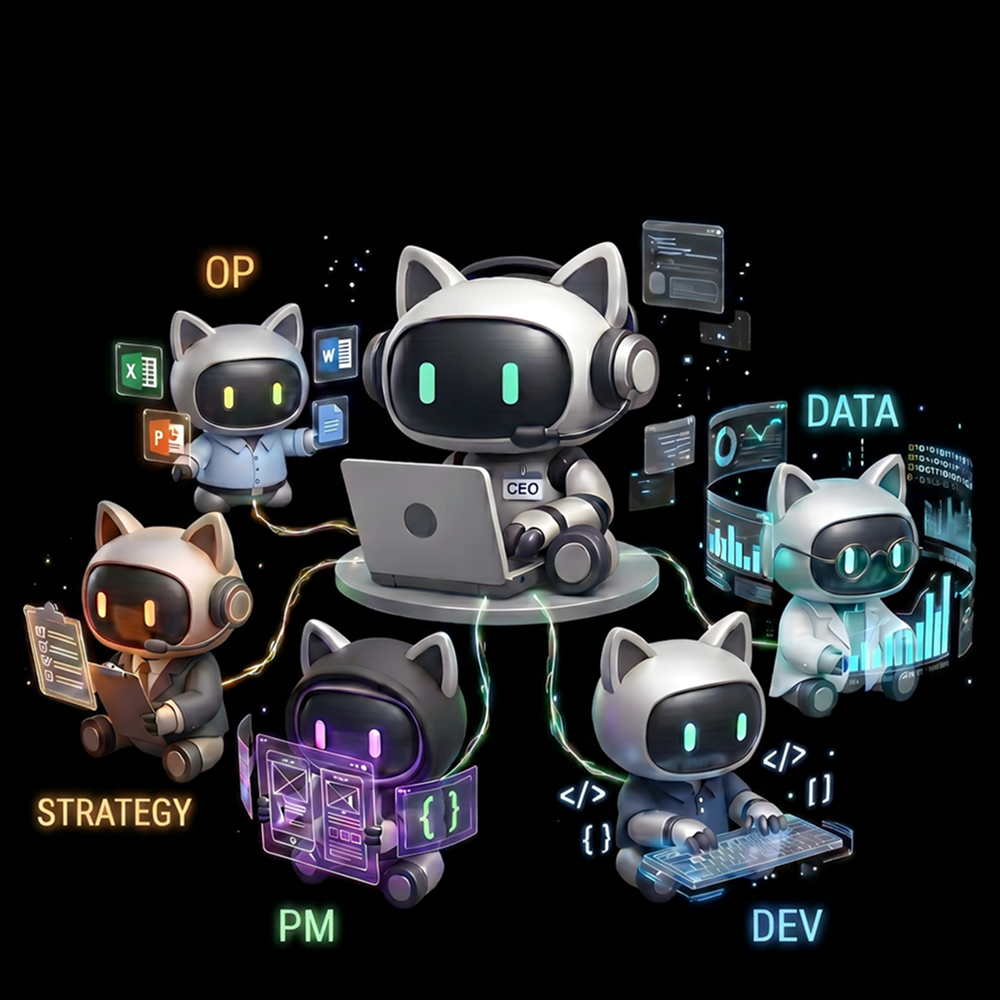
The official public page, WorkBuddy - A New AI Agent Paradigm for Office Work, is also very direct about the positioning:
- autonomous planning and delivery for complex multimodal tasks
- support for multiple agents working in parallel
- an office-oriented new paradigm
The same page publicly shows capability split across expert roles such as:
- transaction analysis
- design prototyping
- content creation
HRoperations- engineering assurance
- data analysis
That lines up well with the public cases above.
Because construction marketing and power-channel policy work are never one action. They are usually:
- read files
- break down structure
- generate a new version
- scan consistency
- then hand the result to humans for review
So from the public product page to the public case studies, the product direction and the practical direction are fairly consistent.
Which Teams Should Test This First
I think the following teams are the best early candidates:
- construction and engineering marketing teams
- solution teams that repeatedly rebuild bid
PPTs - regional project-marketing, client-follow-up, and key-project-ledger teams
- managers who output frequent weekly reports, daily reports, and topic-meeting materials
- channel-management teams in power, new energy, or other policy-heavy industries
If your team already looks like this:
- many local files
Word / PDF / PPT / Excelmixed together- weekly reporting and version rebuilds never stop
- the biggest human fear is missed edits, wrong edits, and broken context
then these cases are worth testing seriously.
How I Would Evaluate It Instead of Just Watching a Demo
If you actually want to judge whether WorkBuddy fits your business, I would test three tasks directly:
- rebuild one old bid
PPT - generate one project weekly or daily report
- structure one client or project ledger
Do not only check whether the output "looks good." Check:
- how many back-and-forth rounds you still need
- whether review time actually shrinks
- whether file structure stays intact
- whether multiple files start conflicting with one another
- whether the second reuse of the same workflow gets materially cheaper
If what you care about more right now is:
- how to unify Tencent-family and other China-model API access
- how to buy API keys
- how to compare current model routes and pricing
start here:
My Final Take
If I had to reduce this whole construction-marketing review to one sentence, it would be this:
WorkBuddy is no longer just an office helper that "writes things for you." It is starting to take real work inside document-heavy project industries across bid flow, reporting flow, and client-ledger flow.
The most important part is not whether one demo sounds polished. It is that public cases already show tougher signals such as:
PPTXstructure-level analysis- reconstruction of a
40-page bid deck - automatic
SCQAweekly reports - structured ledgers for
56key projects - multi-file consolidation of
35expert comments - coordinated edits across
14files with cross-reference updates
That points to one conclusion:
in frontline industries with heavy documents, heavy process, and heavy version churn, WorkBuddy is starting to look like it can actually do the job.
FAQ
What is WorkBuddy best suited for in construction marketing?
Based on the public cases, at least these workflows look like a strong fit:
- bid
PPTanalysis and reconstruction - weekly and daily report generation
- structured client and project ledger cleanup
- marketing-plan and bid-material analysis
What is the clearest efficiency change shown in the construction case?
The most concrete public numbers are:
- manual
PPTrevisions used to take2-3hours - now they can be compressed to about
5minutes of waiting plus human review and fine-tuning - one
40-page bidPPTdropped from half a day to under1hour
Why is the power-industry case worth reading alongside the construction one?
Because it shows WorkBuddy is not only editing one file. It can also help with:
- multi-round expert feedback
- multi-file consistency maintenance
- clause reordering
- cross-reference verification
That matters for construction, engineering, and other document-heavy industries too.
Is WorkBuddy closer to a chat assistant or an AI agent office system?
If you read the public product page together with the public cases, it looks more like:
- a system that can read files
- break down structure
- generate new versions
- handle multi-step tasks
So the better label is an AI agent office system, not just a chat tool.
If I want to compare access paths first, where should I start?
These three pages are the clearest starting points: