Tencent Marvis Intelligence Monitor Review: Competitor Monitoring, News Alerts, and a Weekly Report Workflow
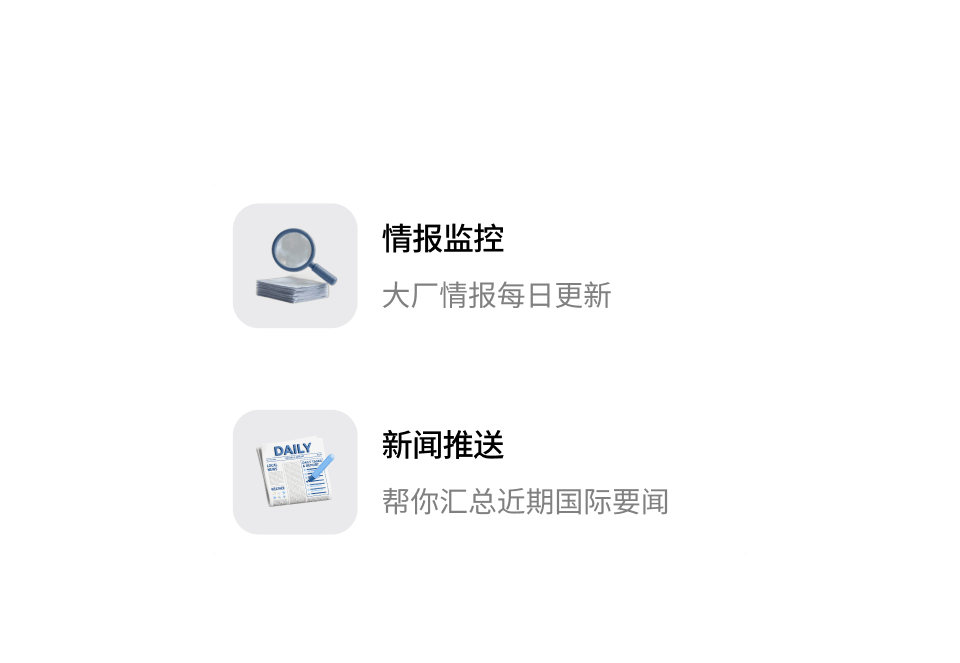
If you still think of Marvis as mainly a system-level AI assistant that can organize files or remotely operate a computer, that is only half the picture.
For this article, I went back through the public materials that speak most directly to intelligence monitoring, competitor tracking, keyword collection, automated alerts, weekly report generation, and comparison-chart delivery. After reading them together, my view is fairly clear:
The more interesting Marvis direction is not just "doing one task for you," but connecting monitoring, collection, deduplication, classification, reporting, and delivery into one continuous workflow.
That matters because most teams are not actually blocked by "not knowing how to search." The real pain usually looks like this:
- information changes every day
- competitor updates are scattered across different sites and channels
- once you find the news, someone still has to filter it, label it, and summarize it
- the most time-consuming part is often not search, but turning the result into a weekly report, slide deck, or spreadsheet that other people can use
In the public Marvis case studies, that full chain is exactly what starts to show up.
Conclusion First
- As of June 29, 2026, the most convincing public
Marvis intelligence monitorsignals are not about whether it can browse the web once. They are about whether these pieces are starting to connect:- keyword monitoring and news collection
- deduplication and classification
- competitor monitoring report generation
- PPT / Word / Excel delivery
- scheduled reminders and automated tasks
- On the Marvis website, the public description of the
intelligence monitoris already quite direct. The official examples include:- large-company intelligence monitoring
- social news alerts
- ticket information collection
- In Tencent Cloud Developer Community case studies, that positioning becomes a fuller
report workflow, including:- daily keyword tracking
- deduplication and categorization
- weekly report or PPT output
- scheduled reminders
That is why I do not think the main question here is "can Marvis search online." The better question is:
Can Marvis intelligence monitoring turn raw updates into something a real team can actually review, present, and act on?
Why Intelligence Monitoring Reveals More Than Ordinary Search
Almost every AI product can claim it supports search.
What is much harder is everything that happens after the first search result appears:
- the same story shows up in repeated rewrites across multiple outlets
- source quality varies a lot
- tracked keywords change over time
- leaders do not want a pile of links, they want an edited conclusion
So the difficult part of competitor monitoring has never been "finding information."
It is this:
making information flow into a deliverable output on its own.
That is why I think this Marvis intelligence monitor line is more revealing than a generic chat demo. If Marvis wants to prove itself inside real business workflows, monitoring and reporting is a much stronger test than one-shot Q&A.
Case 1: The Official Site Already Frames "Intelligence Monitor" as a Standalone Agent
The Marvis website does not present only one general assistant. It presents a group of different agents with different jobs.
One of the most notable ones is:
Intelligence Monitor
The public examples attached to it are simple but telling:
- large-company intelligence monitoring
- social news alerts
- ticket information collection
Those examples matter because they do not describe a one-off search engine. They describe long-running tasks:
- continuously tracking specific companies or competitors
- pushing updates around defined event types
- repeatedly checking for scarce or fast-moving information
These use cases all share the same characteristics:
- they need to run continuously
- they need to be timely
- they need alerts
- they need to reduce manual checking
That already puts the product in a different category from "you ask once, it answers once."
Case 2: A Public Example Already Describes It as a Competitor Monitoring Report Workflow
The most valuable public example I found comes from the Tencent Cloud Developer Community article:
"Marvis 6-Agent Collaboration in Practice: Using a Work Assistant as the Example"
The important part is not that the article lists six agents. The more important part is that it gives a prompt that sounds very close to what a real team would ask for:
Monitor competitor A's latest moves, generate a monitoring report, and remind me every Friday to review it.
Behind that sentence is a fairly standard competitor monitoring workflow:
- Intelligence Monitor
- crawls public web information
- keeps tracking by keywords and schedule
- Knowledge Manager
- deduplicates and classifies the findings
- organizes updates by categories such as product launches, marketing activity, or financing news
- Work Assistant
- turns the material into a monitoring report
- can output a
PPT
Why does this feel much closer to production work than a normal AI demo?
Because it does not stop at "help me search." It starts to look like a small research workflow:
- one layer watches sources
- one layer cleans and organizes information
- one layer prepares the final reporting asset
That is a much more practical reading of what Marvis report workflow means in the real world.
Case 3: Weekly Reports, PPTs, and Scheduled Reminders Are the Parts That Actually Drain Human Time
One detail in the public case studies is easy to miss:
the final output is a report and a reminder, not just a list of collected links.
That point is more important than it sounds.
In most teams, the most wasteful part of competitor monitoring is not opening websites. It is everything after that:
- copying updates into a document
- removing repeated items
- grouping them by topic
- making a slide deck for a manager
- remembering to repeat the process every week
In the public Marvis examples, the workflow already reaches three higher-value steps:
- generate a monitoring report
- convert it into a
PPT - turn it into a scheduled reminder
That means Marvis is trying to take over not only the "find" step, but the fuller chain:
find + clean + deliver + remind
That is why I think it is fair to describe this as the early shape of an intelligence operations hub, not just a desktop AI that can search the news.
Case 4: Real Users Are Already Using It for Daily News Briefings
Another public experience article, I Used Tencent Marvis for a Day and Decided This Dark Horse Should Stay on My Computer, adds a very practical scenario:
- the user asks it to summarize yesterday's tech news every morning at
8 - Marvis generates a briefing proactively
- the update can also be pushed to the phone
On the surface, that sounds like a small convenience feature. In practice, it is a meaningful product shift.
It suggests Marvis is moving toward:
- automated tasks
- scheduled triggers
- cross-device reminders
That changes the product shape from passive response to active monitoring.
For teams in marketing, strategy, research, investment, or consulting, that shift matters a lot. Their daily pain is usually not "I cannot search." It is:
- opening the same tabs every morning
- remembering which keywords to track
- worrying that an important change might be missed
If an AI assistant can reliably absorb even part of that recurring work, the value is already significant.
Case 5: Competitor Monitoring Is Not Only About News Search. It Starts Reaching Report and Chart Delivery
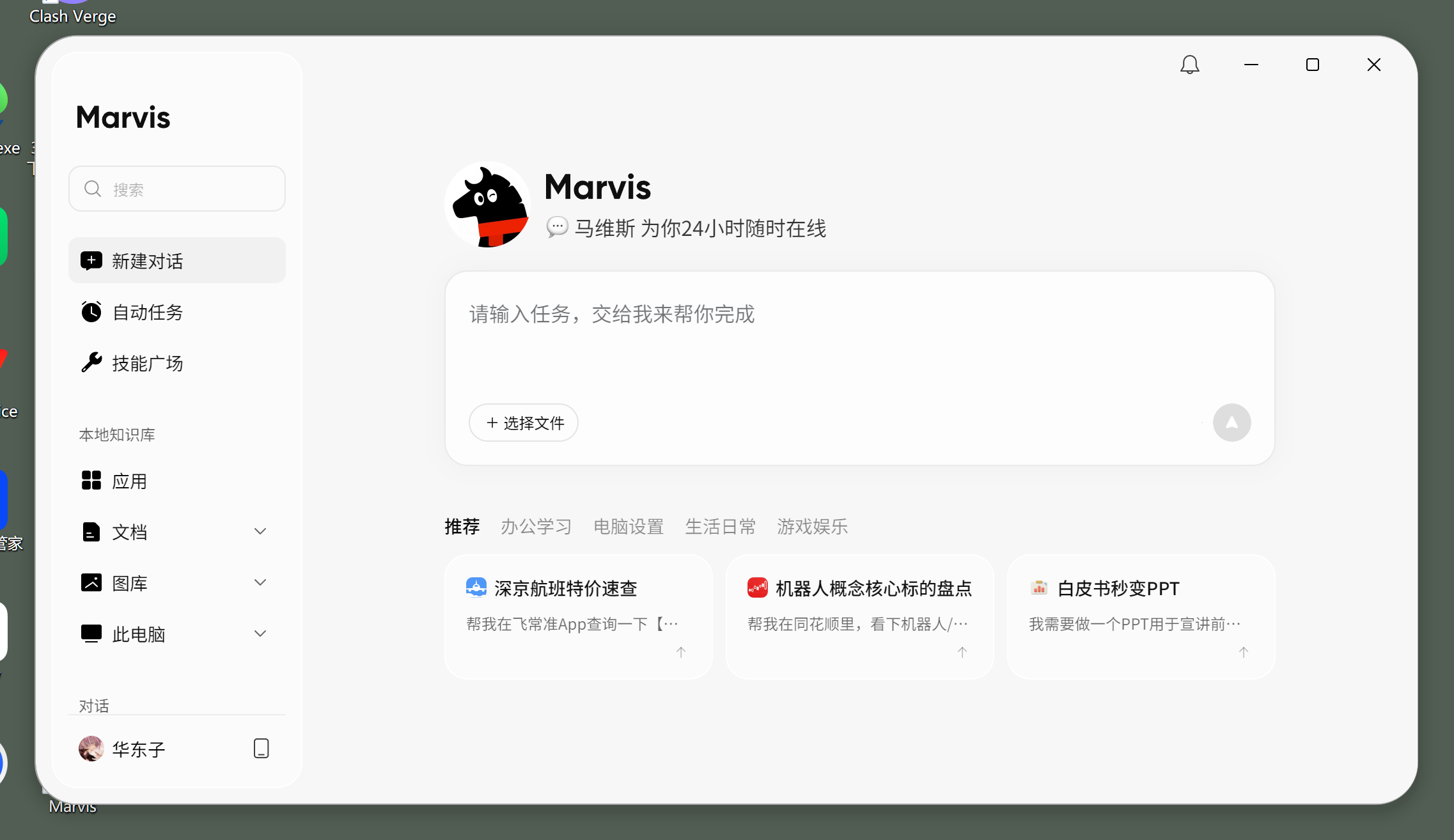
If you only look at the phrase intelligence monitor, you might assume this is just a news-alert bot with reminders.
But another public article, Multimodal AI in Practice: Marvis From Text to Images, adds a stronger signal:
Marvis is already being shown turning competitor information into Word and Excel deliverables.
The public case in that article is:
- build a competitor analysis report for smartwatches
- collect images and specs for
3competing products - generate a Word report
- produce Excel comparison charts
The most interesting part is not "it understands images." It is the last mile:
- create the
Worddocument - write the title, sections, tables, and conclusions
- create the
Excelfile - write product, feature, price, and score fields
- generate bar charts and radar charts automatically
That means the product direction is no longer just "help me find source material." It is trying to cover a fuller delivery chain:
- collect material
- extract fields
- organize conclusions
- visualize comparisons
- hand over files people can actually present
That is a much bigger deal than a tool that can search and summarize but still leaves the final report assembly to humans.
What the Real Production Workflow Seems to Look Like
If you stitch the public materials together, the Marvis intelligence monitor workflow now appears to have at least these characteristics:
- there is a dedicated
intelligence monitoragent rather than forcing everything through one chat box - monitoring is not only about scraping pages; it also includes keywords, frequency, and reminders
- the middle of the process includes deduplication and classification instead of simply forwarding raw links
- the end of the process can become a weekly report,
PPT,Word, orExceldeliverable - the workflow can attach to automated tasks and cross-device push notifications
That is why I think the more accurate framing is:
monitoring -> organizing -> reporting -> reminding
This is much closer to a real business intelligence workflow than a plain news-search assistant.
Which Teams Should Test This First
I think the teams most likely to feel value early are:
- marketing and competitor intelligence teams
- strategy, industry research, investment research, and consulting teams
- executive operations teams that produce daily or weekly news briefings
- product teams that watch competitor launches, pricing changes, and campaign activity
- presales or solution teams that need to turn monitoring output into reporting materials
On the other hand, the value may feel weaker if your team almost never does these things:
- long-term tracking of competitors, companies, or industry topics
- recurring weekly report or monthly report creation
- thematic information organization
- internal or external briefing based on monitored updates
If I Were Testing It Myself, I Would Test It This Way
Do not start by asking whether Marvis intelligence monitor can "find something online." Test the full chain instead.
- Give it a real competitor list and a real keyword set, then check whether the tracking can stay continuous.
- Inspect whether repeated stories are removed instead of being stacked as duplicated links.
- Ask for a recurring weekly report in
PPTorWord, then judge how much editing the final file still needs. - Add one scenario that requires
Excelcharts, and see whether the data conclusions become useful visuals rather than only paragraphs. - Only after that should you evaluate alerts and phone delivery, because that is what decides whether the workflow can stay alive over time.
If you are also comparing model access, API cost, or unified gateway setup while evaluating this workflow, these are the simplest starting points:
Final Verdict
If I had to summarize my view of these Marvis intelligence monitor cases in one sentence, it would be this:
What makes Marvis interesting is not just that it can watch keywords, but that it is beginning to connect news collection, deduplication, classification, monitoring reports, PPT or Excel delivery, and scheduled reminders into something that looks like a real intelligence operations workflow.
If that chain keeps improving, the biggest change will not simply be "search becomes faster." It will be:
- less time spent on repetitive information cleanup
- more standardized weekly report production
- faster detection of competitor changes
- a shift from "updates scattered in chats" to "deliverable conclusions people can review"
That is why I think this direction already feels closer to an intelligence operations hub than to a basic news search assistant.