Tencent WorkBuddy in Power and Energy: A Review of Multi-Expert Policy Rewrite Cases, 35 Feedback Items, and 58 File Updates
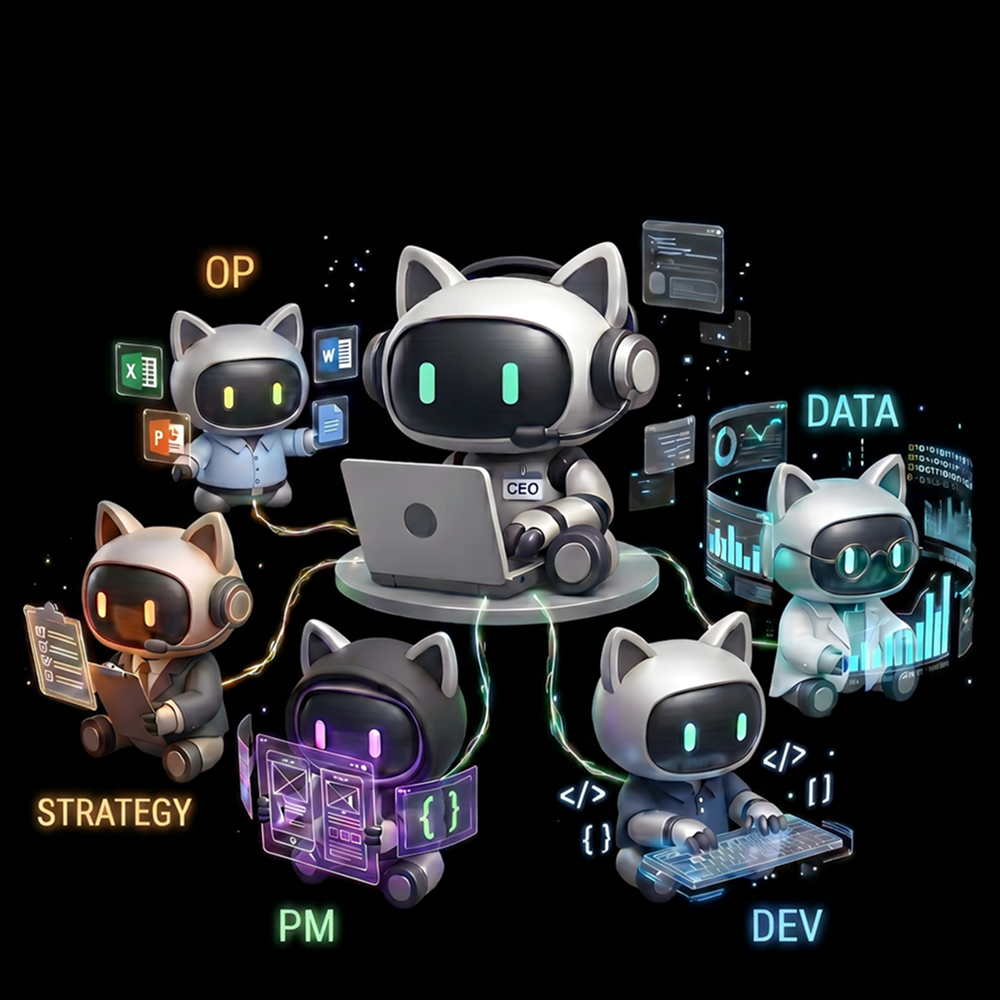
If you read WorkBuddy in the power and energy sector as just another AI tool that helps tidy policy documents, you are probably missing the part that matters.
For this article, I reviewed several public sources together:
- Tencent Cloud Developer Community: WorkBuddy in Practice: How AI Handled 35 Deep Feedback Items From Three Power-Industry Experts
- Tencent Cloud Developer Community: WorkBuddy User Notes: Rebuilding a Full Channel-Partner Management Policy With AI
- Tencent official: Tencent Cloud Launches an Efficiency Agent Toolkit for Broader AI Productivity Workflows
After reading them side by side, my take is fairly direct:
The most interesting signal is not whether WorkBuddy can write policy text. It is that public cases now place it inside much more production-like work: multi-round expert feedback consolidation, cross-file policy restructuring, terminology consistency, and linked tool updates.
One boundary matters up front so this does not get overclaimed:
I am not saying every power company or electricity retailer is using the same visible WorkBuddy front end for the same workflow.
The safer reading is this:
These public cases show the kinds of real operating scenarios Tencent's broader AI, agent, and workflow layer around WorkBuddy is already entering.
The short verdict first
-
As of June 29, 2026, the most convincing public
WorkBuddysignals in power, new energy, and electricity-sales operations cluster around two high-friction tasks:- multi-round expert feedback consolidation and consistency control
- full channel-partner policy upgrades and text-system restructuring
-
The concrete public numbers attached to those cases include:
3power-industry experts35deep feedback items58file edits14coordinated file updates43line-by-line policy rearrangements- a channel policy upgrade from
V5.1toV5.2
-
If you are evaluating AI for:
- new energy operations
- electricity retail
- channel-partner governance
- expert-review consolidation
- multi-file compliance and standards work
then these cases are much more useful than the usual "AI helps write documents faster" story.
Why power and energy teams are a good test for workflow-heavy AI
In power and energy, the hard part of policy work is usually not that nobody can draft a document. The hard part is that:
- terminology is highly specialized
- senior experts often have strong and valid but different opinions
- files, versions, and cross-references pile up quickly
- one clause change can force updates in tables, evaluation logic, and even companion
HTMLtools - every review comment may be reasonable on its own, but the whole set can drift out of alignment
So the real challenge is rarely raw writing. It is this:
can the workflow keep logic aligned across repeated expert reviews, multiple files, and multiple output formats?
That is why this category is a better buyer test than a simple prompt demo. What matters is not "can it generate text?" but:
- can it converge feedback?
- can it keep terms consistent?
- can it update multiple files together?
- can it push a policy change through to supporting tools as well?
Case 1: Three veteran experts and 35 feedback items looks a lot more like real policy revision work
The Tencent Cloud Developer Community article WorkBuddy in Practice: How AI Handled 35 Deep Feedback Items From Three Power-Industry Experts is useful because the operating shape looks close to a real review cycle, not a demo-friendly one.
Public details in the article summary are already fairly specific:
- the scenario centers on a new-energy company's sales-management function
- the task was to consolidate input from
3veteran power-industry experts with40years of experience WorkBuddywas used to optimize a full channel-management policy system- the stated goal was to keep consistency and logical closure across multiple rounds of expert feedback
The article outline also breaks the process into three rounds:
- Round one:
19optimization items from expertsAandB - Round two: companion-table fixes and a full consistency scan
- Round three: consolidation of
35feedback items from expertsA,B, andC
That matters because the hard part here is clearly not producing a first draft. It is:
- repeated revision cycles
- simultaneous multi-expert input
- keeping related files aligned
That is much closer to real sector policy maintenance.
The valuable part is not speed alone. It is whether the system stays coherent
The line I care about most in the public description is the claim that the workflow maintained:
consistency and a closed logical loop across multiple rounds of expert feedback
That is where many policy teams break down in practice:
- round-two edits change the logic set by round one
- a third reviewer introduces terms that no longer match earlier sections
- scoring criteria change, but tables and evaluation rules do not
- one document gets upgraded while related files stay on the old version
So the commercial value is not just that AI writes faster. It is whether:
the system can keep a policy framework from drifting apart during repeated revisions.
Case 2: The electricity-sales policy example is not a single document edit. It is a package-level rebuild
The second public article, WorkBuddy User Notes: Rebuilding a Full Channel-Partner Management Policy With AI, pushes the scope further.
Its public summary is unusually direct:
- the operator was a sales-management lead
- over roughly one week,
WorkBuddywas used to upgrade a full channel-partner management policy package fromV5.1toV5.2 - the work involved
14coordinated file updates 43line-by-line policy rearrangements- and synchronized iteration of a companion
HTMLtool
That is not "AI helped edit a document." It is closer to:
- a document system upgrade
- clause-order restructuring
- evaluation-framework adjustment
- companion digital-tool updates
In other words, it looks more like:
policy engineering work
than ordinary copy editing.
The production-like signal is that both files and tools moved together
The HTML tool detail is one of the most valuable parts of this case.
In real operations, policy text rarely lives alone. It often drives:
- evaluation forms
- review checklists
- rule explanations
- internal workflow pages
- operational templates
So one of the biggest friction points is not the document itself. It is this:
documents and tools depend on each other.
If an AI workflow only edits the policy text, but the team still has to manually repair every downstream tool, the real efficiency gain is limited.
At minimum, this public case suggests that the WorkBuddy path is starting to touch integrated updates across:
documents, rules, and tools
rather than isolated drafting.
Case 3: Why this looks better suited to agent workflows than one-shot prompting
Put the two public case articles together and the common pattern becomes obvious:
these are not one-prompt tasks.
The actual task chain looks more like this:
- understand the current policy baseline
- take in one round of expert comments
- scan companion files for consistency
- merge second-round and third-round feedback
- update related tables or tools as part of the same revision cycle
That matters because it maps cleanly to the kind of workflow buyers usually want from an agent system:
- not just answering a question
- but continuing a complex task over time
- while keeping intermediate state intact
If you try to run the same workload through a basic chat loop, the common failure modes are obvious:
- earlier changes get forgotten
- the third edit breaks the structure created in the first pass
- expert terminology never gets normalized across the package
The public cases are effectively trying to prove that:
multi-round collaborative policy revision can be handled inside a more stable agent workflow rather than a disposable chat exchange.
Why Tencent places WorkBuddy inside an "efficiency agent toolkit"
Tencent's official article from June 5, 2026, Tencent Cloud Launches an Efficiency Agent Toolkit for Broader AI Productivity Workflows, is not specifically about the power sector, but it provides useful context.
The public claims include:
WorkBuddypersonal edition is described as one of the most popular efficiency-agent tools in China- the enterprise path supports employee-and-
AIcollaboration - Tencent Docs and Tencent Lexiang capabilities are described as native to the
WorkBuddyworkspace - after connecting a newer model:
- first-response speed improved by
54% - average task completion time dropped by
47%
- first-response speed improved by
- Tencent says related practices now span
20+industries, including healthcare, consumer electronics, finance, gaming, retail, and education
The correct way to read those numbers is carefully:
- they are public case and company-level claims from the cited materials
- they are not a universal promise for every deployment
Still, they matter because they place the power and electricity-policy cases inside a larger product direction:
Tencent is clearly positioning WorkBuddy as part of a broader efficiency-agent workstation, not as a narrow writing widget.
That makes policy restructuring look less like an edge case and more like a meaningful benchmark task.
Which teams should pay attention first
Best fit for immediate evaluation
- new-energy and electricity-retail teams
- operations teams maintaining large channel-partner policy sets
- expert-driven teams that repeatedly need to merge senior review feedback
- management teams whose files, tables, rule pages, and helper tools need synchronized updates
Lower urgency to evaluate
- teams with very small document volume
- teams with little version churn
- teams with no multi-expert review pressure
- teams whose policy files and operational tools are still completely separate
If you want to build a similar workflow yourself
If your main question is not "which vendor name appears in the public case?" but rather "how do we test this workflow shape in our own stack?", I would start here:
The important part is not copying a brand label. It is evaluating the workflow as one system:
- model capability
- agent orchestration
- document read/write
- multi-file consistency handling
- downstream tool updates
That is a more useful buyer lens than judging the category on one polished demo.
Final take
If I had to summarize these public WorkBuddy power-and-energy cases in one sentence, it would be this:
The signal worth paying attention to is not that AI can help draft policies. It is that public cases now show it moving into the hardest part of real sector work: multi-round expert consolidation, cross-file consistency, policy-package upgrades, and companion tool updates.
If that workflow becomes reliable, the upside is larger than office productivity alone.
It starts looking like:
knowledge engineering and policy engineering for real operating teams.