Tencent WorkBuddy Healthcare Use Cases: Why Medical Data Analysis, EMR Processing, and Million-Record Database Validation Are Moving to AI Agents

If you think the value of WorkBuddy in healthcare is just "helping doctors write summaries" or "another AI chatbot for hospitals," you are probably looking at the wrong layer.
I went through several public case studies specifically tied to medical data analysis, electronic medical records (EMR), physical exam reports, insurance claim records, and million-record database exploration and quality checks. After reading them, my conclusion is pretty clear:
The biggest value of WorkBuddy in healthcare is not prettier writing. It is that the product is starting to plug into real medical data workflows.
And for healthcare data teams, the hard part usually is not "knowing how to analyze," but rather:
- too many data sources
- too many tables
- messy schemas
- time-consuming cleaning and validation
- repetitive standardized reporting
That is exactly why I think healthcare is one of the easiest industries for AI agents like WorkBuddy to show real business value early.
The short verdict
- As of June 29, 2026, the most convincing public
WorkBuddyhealthcare use cases cluster around three areas:- Medical data cleaning, field exploration, and data quality validation
- Structured processing of heterogeneous materials such as EMR, physical exam reports, and insurance claim records
- Multi-table joins, patient profiling, and standardized statistical report generation
- Based on public Tencent Cloud developer community case studies, these are no longer "let's try AI for fun" experiments. They already include fairly concrete signals around:
- data scale
- data types
- multi-table structures
- quality report outputs
- reusable skills
- and measurable efficiency gains
- If your work sits in hospital IT, medical data analytics, clinical trial data, BI, insurance data, or pharma data processing, these examples are much more useful than generic AI office demos.
Why healthcare is such a strong fit for workflow-driven AI
What actually wears healthcare teams down is often not the judgment work. It is everything around it:
- too many tables
- too many fields
- too many scattered inputs
- unstable data structures
- repetitive weekly and monthly reporting
In other words, the most painful part is usually not "writing the conclusion." It is this long chain:
raw data intake -> field exploration -> anomaly tagging -> statistical output -> quality validation
And in the public case studies, the clearest thing about WorkBuddy is that it is not being used like an isolated chat window. It is moving into steps like:
- data download
- data cleaning
- field exploration
- multi-table joins
- Word and Excel output
- rule reuse
- skill packaging
That makes it look much more like:
an automation hub for medical data work
rather than:
a model window that polishes conclusions
Case 1: When healthcare data hits the millions, this is not a simple "look it up" task anymore
The first public article that feels closest to a real healthcare production environment is this Tencent Cloud developer community post:
WorkBuddy User Notes: An AI Productivity Revolution for a Medical Data Professional
What makes it valuable is how specific it gets about day-to-day data work instead of staying high level.
The article says the author routinely handles:
- millions of medical data records
- outpatient prescriptions
- inpatient orders
- drug outbound records
- hundreds of tables and millions of rows
That is already very close to a real production environment. It is not a toy spreadsheet demo. It is basically describing this reality:
SQL everywhere, Python scripts everywhere, and field exploration plus data cleaning eating up huge amounts of time.
In that article, the key value of WorkBuddy is not "explaining what a field means." It is taking over repetitive work like:
- exploring field logic
- flagging anomalies
- generating Excel summary sheets
- generating Word-based data quality validation reports
The post also gives fairly clear efficiency benchmarks:
- single-table exploration drops from 2 to 3 hours to 15 minutes
- multi-table analysis drops from 1 to 2 days to 1 to 2 hours
- comparing two dataset versions drops from 3 to 4 hours to 10 minutes
- some steps save up to 95%
Why does this feel real? Because the real burden in healthcare data work is rarely "does AI know how to summarize." It is this:
behind every deliverable sits repeated cleaning, comparison, aggregation, and validation work that is repetitive but exhausting.
Case 2: In healthcare data, the most valuable thing is not writing SQL, but turning a workflow into a reusable system
In the same article, another SEO-worthy point is the explicit mention of Skill.
The author packaged an entire reusable workflow covering:
- medical database download
- cleaning
- summary sheet generation
- validation report generation
So when a new dataset arrives, one instruction like:
- "Process this with the healthcare data workflow"
can trigger the whole sequence.
I think this point matters a lot, because in healthcare the real pain is not doing something once. It is doing the same process again every week, every month, and every project cycle.
If WorkBuddy can truly turn these steps into reusable skills, its value is not just "saving time." It means:
starting to convert analysts' tacit workflows into repeatable, standardized operating flows.
Case 3: 2.4 million records and 9 tables: this looks like a real database exploration job
The second article that deserves a place in a healthcare SEO cluster is:
WorkBuddy Hands-on Tutorial: From Zero to Million-Record Healthcare Database Exploration and Quality Validation
This one is valuable because it gives a very concrete task size:
- 9 tables
- around 2.4 million simulated healthcare records
- covering:
- outpatient prescriptions
- inpatient orders
- drug outbound data
- expense details
And the task breakdown looks very much like a real project:
- explore field logic table by table, and flag anomalies and missing values
- aggregate outbound data by drug dimension
- generate a standardized data quality validation report
- cross-check results using multiple methods
So this is no lightweight "query one table" exercise. It is a standard healthcare database task.
The public efficiency comparison is also strong:
- data download drops from around 30 minutes to 5 minutes
- field exploration drops from 3 to 4 hours to 15 minutes
- quality report generation drops from 2 to 3 hours to 5 minutes
- multi-method verification drops from 3 to 4 hours to 10 minutes
- end-to-end time drops from about 2 days to about 45 minutes
- overall efficiency gain is around 95%
Why is this useful as a reference? Because it tackles the most annoying part of medical data work:
not getting the data, but figuring out whether the data is actually usable once you have it.
Case 4: EMR, physical exam reports, and insurance claim records are not something you solve with one format and one script
The third article that helps explain healthcare data complexity is:
How I Used a "Lobster" to Free My Hands: Deep WorkBuddy Enablement for Medical Data Analysis
Its main value is that it makes the heterogeneity of healthcare data much clearer.
The article explicitly says the author regularly deals with:
- clinical trial data
- electronic medical records (EMR)
- physical exam reports
- insurance claim records
This complements the earlier database exploration cases well. In a real healthcare production environment, the hard part is often not just the database. It is also that:
- some inputs are structured tables
- some are PDF or Word files
- some are semi-structured text
- field naming and rules differ across sources
The article mentions several actions that look very close to real-world production work:
- upload sample PDFs and perform document understanding directly
- identify whether indicators are high or low and generate short clinical interpretation notes
- link outpatient Excel diagnosis lists with inpatient medication lists
- left join multiple tables using patient ID
- generate a simple patient profile and comorbidity fields
That means WorkBuddy in this case is no longer just "reading a table." It is handling:
- OCR and document understanding
- reuse of medical rules
- table joins
- structured output
That is critical for healthcare data teams, because the hardest part of many jobs is not writing SQL. It is this:
how to stitch together multiple data sources that were never designed to work cleanly together.
Case 5: Standardized statistical reporting is often the most repetitive heavy lift in medical data teams
The same article also includes a point that is especially worth keeping in the piece:
- automatic generation of a Weekly Clinical Trial Subject Safety Report
This is a very common healthcare scenario. Every week, every month, and every project cycle, teams need to produce:
- safety weekly reports
- adverse event summaries
- comparison conclusions
- trend explanations for key indicators
The article describes an approach where the team:
- assigns
WorkBuddya fixed role - specifies a fixed output format
- lets it automatically summarize newly added adverse events and comparison changes for the week
I think this matters because it shows WorkBuddy is not just touching raw data in healthcare. It is already moving across the full delivery chain of:
- data processing
- statistical output
- written reporting
Public Tencent healthcare material also suggests this market already thinks in terms of platforms, records, and collaboration
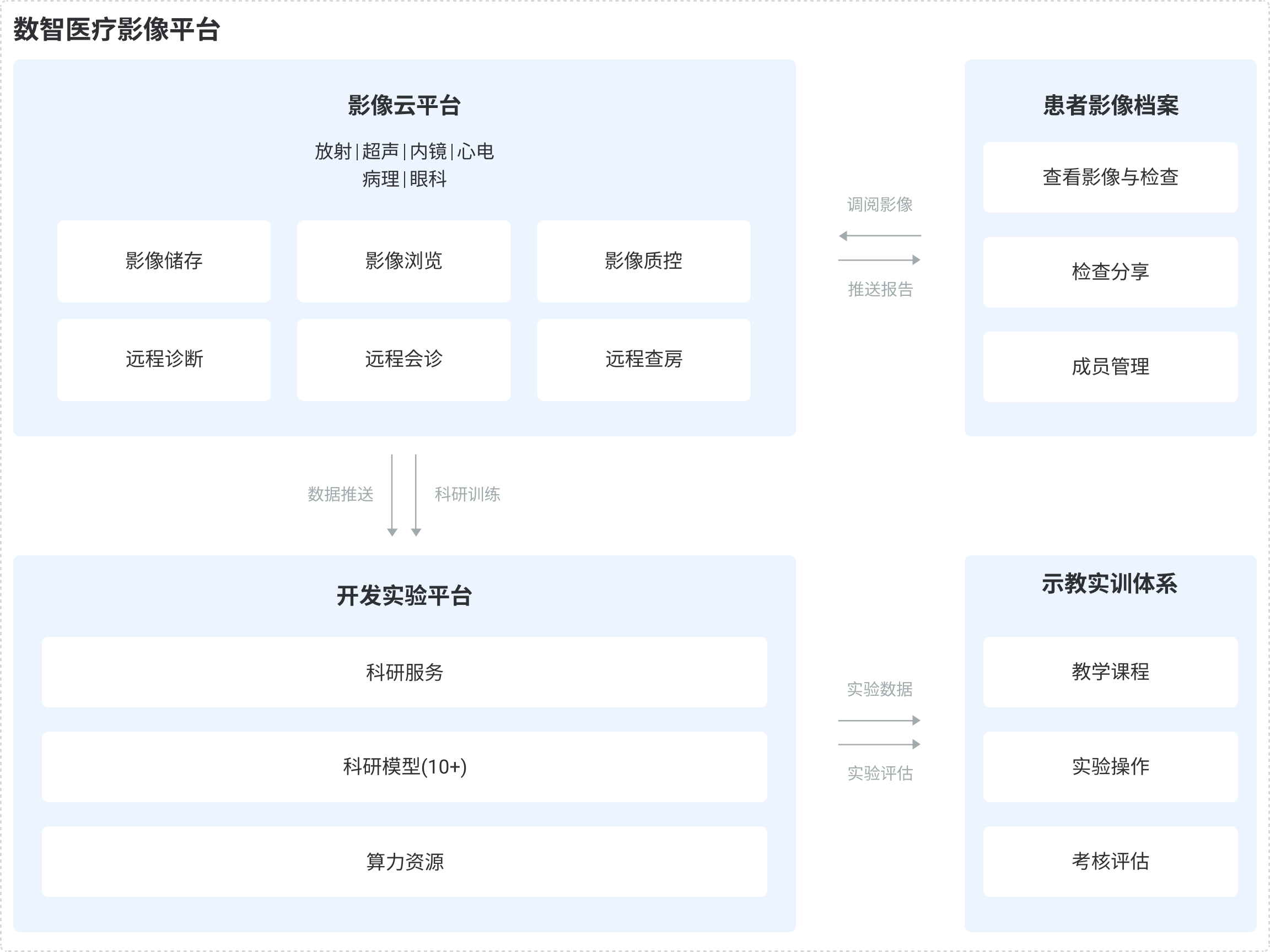
If the first three articles are more about hands-on work at the analyst or team level, Tencent Healthcare's public material gives a broader signal:
- healthcare data and medical imaging are already platform-oriented, record-oriented, and collaboration-heavy environments
From the public diagram alone, you can see elements like:
- imaging cloud platform
- patient imaging archives
- remote diagnosis
- remote consultation
- exam sharing
- member management
This is not a WorkBuddy screenshot, but it helps explain something important:
healthcare already has a strong built-in need for "platform + data + rules + collaboration."
And an agent like WorkBuddy, which is good at connecting data processing, rule reuse, and report output, naturally fits into this kind of environment.
What these public cases tell me about real healthcare production environments
If you combine the case studies above, a pretty consistent picture appears around how WorkBuddy is being used in healthcare:
- real data scale, not demo samples
- millions of rows
- 2.4 million records
- 9 tables
- real data types, not just one spreadsheet
- outpatient prescriptions
- inpatient orders
- drug outbound records
- expense details
- EMR
- physical exam reports
- insurance claim records
- real deliverables, not just question answering
- Excel summary sheets
- Word validation reports
- patient profiles
- clinical trial weekly reports
- real working methods, not just "analyze this for me"
- field exploration
- anomaly tagging
- multi-table joins
- multi-method cross-checking
- skill packaging
That is why I think in healthcare it looks much more like:
a medical data automation workstation
rather than:
a generic chat AI
Which healthcare teams should try it first
Teams that should test it now
- hospital IT departments and medical data analytics teams
- teams cleaning EMR, physical exam reports, or insurance claim records
- clinical trial, drug safety, and high-frequency weekly or monthly reporting teams
- BI teams doing multi-table joins, patient profiling, and field validation
- organizations that already have stable workflows and want to package them into skills
Teams that can wait and watch
- teams without stable, high-frequency workflows
- teams unwilling to define rules and standardized output formats yet
- teams that only want simple Q&A and do not plan to connect AI to real data workflows
How I would test it in practice
- Start with one highly standardized, high-frequency healthcare workflow. Do not begin with a full hospital-wide transformation plan.
- In healthcare, the easiest starting points are usually:
- field exploration and anomaly tagging
- data quality validation reports
- EMR and physical exam report structuring
- weekly and monthly report automation
- Do not just judge whether it "runs." Focus on:
- whether the rules stay stable
- whether the report format is reusable
- whether multi-table joins are accurate
- whether key outputs support spot checks and cross-validation
- If your team already works across multiple systems, it is also worth comparing:
- which scenarios fit a workstation-style agent like
WorkBuddy - which scenarios are still better handled via APIs or an existing data platform
- which scenarios fit a workstation-style agent like
If what you care about more right now is how to plug Tencent-family models, GLM, Kimi, DeepSeek, StepFun, and other models into your own agent workflow through one unified layer, start here:
My final take
If I had to summarize my view on WorkBuddy healthcare use cases in one sentence, it would be this:
What matters most is not whether AI can save healthcare teams a bit of time. It is that WorkBuddy is already starting to enter the truly high-frequency, repetitive, people-draining parts of medical data work: data cleaning, EMR processing, million-record database exploration, data quality validation, and standardized reporting.
That matters much more than whether it can write a polished medical summary. Because the hardest part of healthcare data work has never been one conclusion. It has always been this:
making a pile of heterogeneous, repetitive, tightly standardized, cross-validated data workflows run smoothly and consistently.
If WorkBuddy really works in these places, its meaning for healthcare is not "a bit more efficiency." It is:
starting to pull analysis workflows that once depended on heavy manual handling and repeated validation into a repeatable, reusable, sustainable AI workstation.